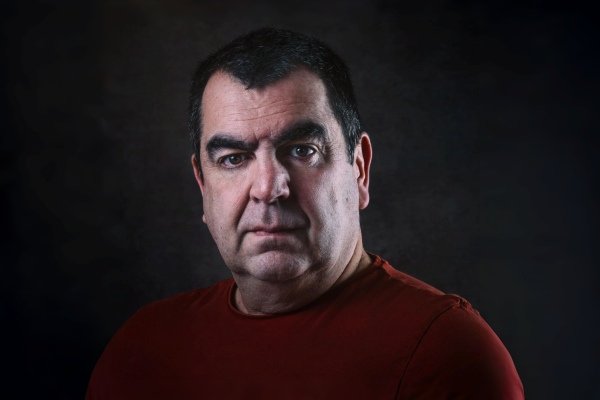
Christian Kieffer
1. Congratulations on winning in the European Photography Awards! Can you share a little about yourself, what inspired you to pursue photography, and how has your journey evolved since your first shot?
I am a self-taught artistic and portrait photographer from Luxembourg.
My artistic journey has been significantly influenced by extensive travels throughout the vibrant landscapes of Latin America since the late 1990s, which have enriched and refined my unique photographic style. I have a particular affinity for the powerful medium of black-and-white photography, which I adeptly employ to capture the essence and dignity of Indigenous communities.
Portraying individuals is a profound passion; it is about narrating the stories of unknown people. The use of black-and-white imagery enhances the emotional depth of these narratives, making the experience all the more meaningful.
2. Can you share the story or inspiration behind your award-winning piece? How does winning this award make you feel about your journey in photography?
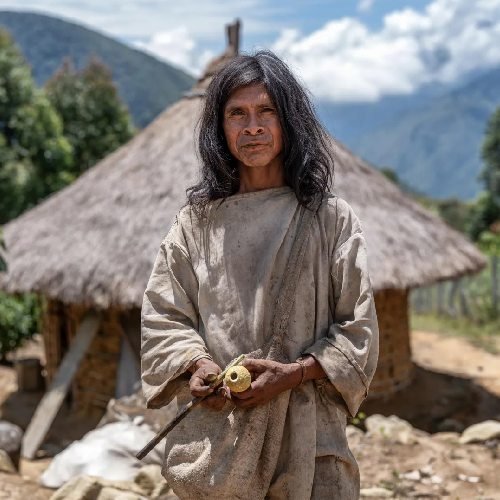
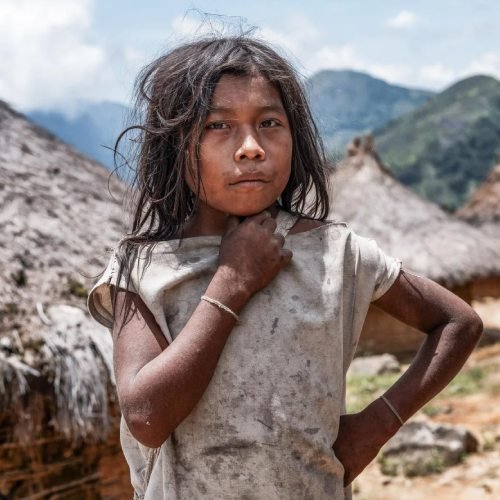
My 2 award winning photos were the two I added into the competition. It's documentary work from my latest trek into the mountains of the Sierra Nevada in the department of César, Colombia, close to the Venezuelan border.
This trek, organised by 3 Colombian friends, took place in September 2025 and was my 4th time visiting different areas and indigenous communities in the Sierra. The 2 winning photos were shot in Sarachui, a Kogi village which can be reached after a 3-hour trek from the small pueblo Guatapuri in the Sierra Nevada.
3. How do you decide which photo to submit for a competition?
A difficult question: these photos were part of a recent exhibition and I prepared around 120 photos in A4 format, and I let some photography friends choose 30 for the exhibition. These two photos were part of that exhibition. Each photo is a personal story for me, which makes it always difficult to find the right selection.
4. What first made you pick up a camera?
I am now 56. When I was 12 or so, I got my first camera. Since then, I have always been taking photos but I became more seriously involved by the end of the 1990s.
5. What’s your favorite type of photography, and why do you love it?
I am a people photographer, from studio portraits to staged things, but my favourite type of photography is street portraits and documentary work, discovering cultures and portraying strangers.
6. What’s your go-to camera setup, and why does it work best for your projects? What’s your favorite feature?
I am shooting manually and not using any programs; only the AF is on automatic. I normally work with prime lenses.
7. If someone looked at your work, what’s the one thing you’d want them to feel?
Seeing into the soul of those I am portraying.
8. What was the most challenging part of capturing your winning shot?
As both photos were shot in the same location, getting there was not so easy. In the morning heat, leaving from Guatapuri for the mountains is a challenge as a backpacker, carrying all my equipment and other needs.
9. Is there a specific place or subject that inspires you the most?
I just love Colombia, where I have been 9 times. The Sierra Nevada mountain range, as well as the Pacific coast (Chocó) and the Amazon region on the three frontiers (Brazil, Peru, Colombia), are my favourite spots.
10. Who or what has been your biggest influence in photography?
Street photographers like Vivian Maier and others of this time are inspiring me, but also so many documentary photographers from our time.
11. What message would you share to inspire photographers to participate in photography awards, and what advice would you give to help them excel in the competition?
Just keep trying and find your own style so that people can recognise your work.
12. What’s one piece of advice for someone just starting in photography?
Just keep trying and don't give up. Learn the essentials of photography first; depending on the art you're doing, consult known photographers or ancient painters.
13. What role do editing and post-processing play in your creative workflow?
Only my artistic portraits are worked on in Photoshop; for documentary and photojournalistic works, I use little editing, mostly in Lightroom.
14. How do you see technology, like AI, influencing the future of photography and your own approach?
As long as AI is marked as such and added to a special section called AI, I am fine with it, but I won't use it myself.
15. If you could photograph anything or anyone in the world, what would it be?
Indigenous communities.