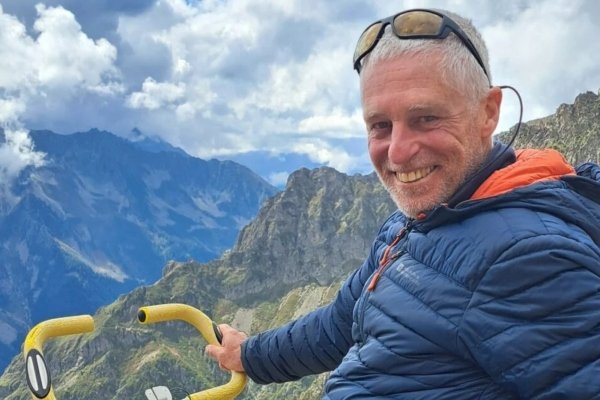
John Twiname
1. Congratulations on winning in the European Photography Awards! Can you share a little about yourself, what inspired you to pursue photography, and how has your journey evolved since your first shot?
I’m a photographer based in Christchurch, New Zealand. I’m driven by a need to understand why certain shapes, spaces, and moments feel more powerful than others. Decoding structures still guides my work, especially in how light interacts with form — revealing geometry, defining space, and turning everyday architecture into something more intentional and expressive.
2. Can you share the story or inspiration behind your award-winning piece? How does winning this award make you feel about your journey in photography?
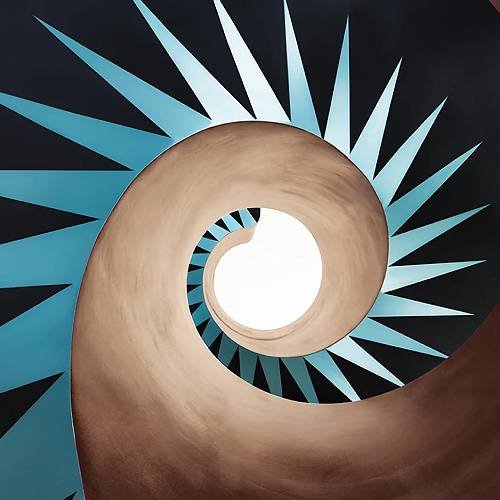
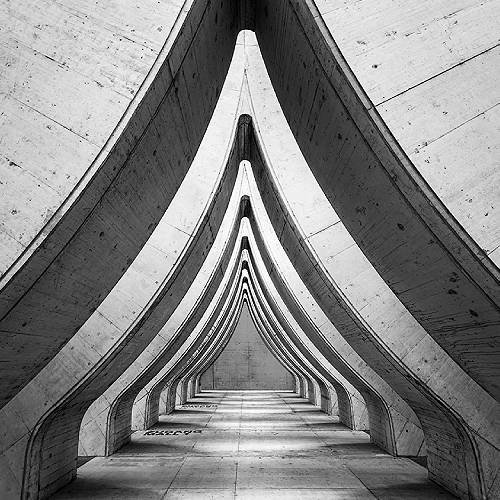
Both images come from a simple but persistent curiosity: what happens when you look up. In the car park and the stairwell, I was drawn to how these everyday structures transform when viewed from below — how the geometry tightens, how the lines converge, and how light reveals patterns you don’t see from ground level.
3. How do you decide which photo to submit for a competition?
I choose competition photos by looking for something that feels unique but still true to my style — an image that offers an unexpected perspective, like looking up in a car park or stairwell, yet remains clean, intentional, and technically strong. It has to stand out immediately and communicate a clear visual idea.
4. What first made you pick up a camera?
My father carried a camera as a soldier in Egypt, Libya, and Italy during World War 2. His black-and-white images of far-flung places and scenes of the aftermath of war fascinated me. As I grew up, I was never far from a camera, and so it seemed only natural that I would pick a camera up at some stage.
5. What’s your favorite type of photography, and why do you love it?
I love photographing landscapes, architecture, street, and people because each offers a different way of understanding the world, and I’ve never wanted to define myself by a single genre. But I’m also naturally hesitant with people — always aware of the camera and how it can interrupt a moment or change the way someone behaves. That sensitivity has only grown now that cameras are everywhere; I’m more conscious of not intruding, not turning real interactions into performances.
6. What’s your go-to camera setup, and why does it work best for your projects? What’s your favorite feature?
My go‑to setup is a Nikon D750 with the 70–200mm, because it lets me control angle, perspective, and distance without the camera intruding on the moment. I can stand back, shape the frame cleanly, compress architecture, and photograph people without disrupting them. My favourite feature is simply that distance — it gives me precision while keeping interactions natural.
7. If someone looked at your work, what’s the one thing you’d want them to feel?
I’d want them to see range — that I’m not defined by one genre or one way of seeing. Whether it’s landscape, architecture, street, or people, I want the work to feel uniquely mine, shaped by perspective and intention rather than category.
If someone looks at my images and thinks, “This photographer moves across subjects but still brings a distinct, thoughtful way of seeing,” that’s the feeling I’m aiming for.
8. What was the most challenging part of capturing your winning shot?
The most challenging part of capturing those shots was finding the exact angle while looking straight up and keeping the composition perfectly clean. In both the car park and the stairwell, the perspective only works if you’re positioned precisely — centred, steady, and far enough back to let the geometry fall into place. Balancing that with the natural limitations of the space, the light, and the physical distance from the subject was the hardest part, but that precision is what makes the images work.
9. Is there a specific place or subject that inspires you the most?
For me, it’s less about a single place and more about certain kinds of subjects. I’m inspired by anything with strong structure — landscapes with clean lines, architecture with rhythm, interesting street scenes, even quiet moments with people where light shapes the interaction. I’m not tied to one genre; what inspires me most is finding something unique in an ordinary space.
10. Who or what has been your biggest influence in photography?
My biggest influences have been Galen Rowell, Shaun Barnett, and the paintings of Graeme Sydney — Rowell for his disciplined, adventurous way of working with light, Barnett for his honest, wide‑ranging approach to New Zealand landscapes, and Sydney for the way he turns quiet places into something atmospheric and precise. Together they shaped how I see: a mix of clarity, range, and a commitment to finding something unique in ordinary spaces.
11. What message would you share to inspire photographers to participate in photography awards, and what advice would you give to help them excel in the competition?
Entering awards is worthwhile because you learn to make mistakes, accept failure, and keep going - it happens to everyone, even the best. Competitions force you to refine your vision, choose with intention, and back your work despite setbacks; that resilience is ultimately what makes your photography stronger.
12. What’s one piece of advice for someone just starting in photography?
The best advice for someone starting out is to be observant — really pay attention to light, structure, and the small details most people walk past. If you train yourself to notice what others overlook, your photography will develop its own voice long before you worry about gear or technique.
13. What role do editing and post-processing play in your creative workflow?
Editing and post‑processing are where I shape the final intention of an image — not to fix mistakes, but to refine what I saw and make the idea clearer.
14. How do you see technology, like AI, influencing the future of photography and your own approach?
I think technology will shape photography in huge ways, but for me personally it’s more of a tool I choose not to use. I still prefer the discipline of seeing, waiting, and responding to real light and real spaces. I think photographers who stay observant, make mistakes, accept failure, and keep refining their craft will stand out because their work carries the weight of lived experience.
15. If you could photograph anything or anyone in the world, what would it be?
I can’t answer that in a fixed, predetermined way — anything and everything is capable of becoming image‑worthy if the light, the moment, or the structure aligns. I’m drawn to whatever I happen to be observing closely at the time, whether it’s a landscape, a person, a building, or something completely ordinary. For me, the subject isn’t chosen in advance; it reveals itself when I’m paying attention.