Benjamin J. Cheng
1. Congratulations on winning in the European Photography Awards! Can you share a little about yourself, what inspired you to pursue photography, and how has your journey evolved since your first shot?
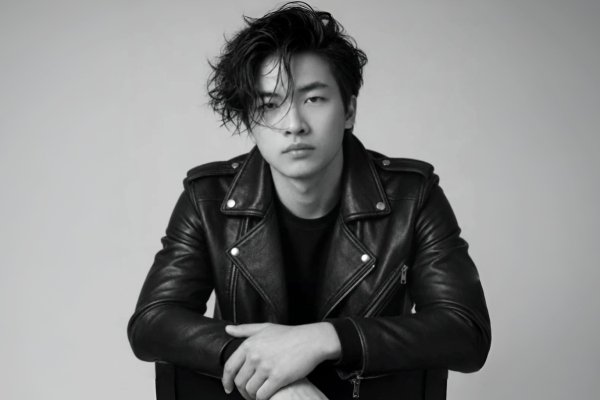
I'm Benjamin J. Cheng, ARPS, LBIPP, EP — a multi-award-winning photographer approaching photography as both technical craft and creative exploration. My work spans architecture, documentary, fine art, and street photography, among others, and has been recognised both in the UK and internationally through exhibitions, publications, and photography awards.
My journey started formally — a BA (Hons) in Photography at Nottingham Trent University — so I came to the craft through structure and discipline before anything else. That's stayed true ever since: even as the subject matter has expanded into documentary and street work, the instinct is the same one I trained in — geometric precision, symmetrical composition, and a principled commitment to natural light.
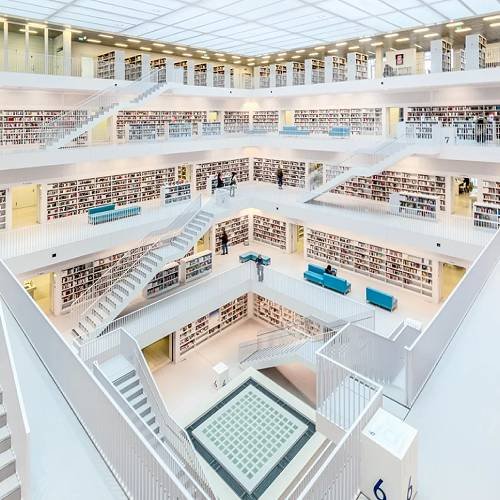
Architecture is where that instinct gets tested hardest, which is why I chose the Leica SL system — the precision it offers is essential for large interior spaces like Stuttgart City Library.
2. Can you share the story or inspiration behind your award-winning piece? How does winning this award make you feel about your journey in photography?
The idea actually started somewhere unrelated to photography. I'd been meaning to find something to read, which reminded me I still held a British Library reader card — something I'd relied on for research during university projects, and returned to more than once while living in London.
Thinking about the British Library led me to remember it operates across more than one site these days, which in turn brought to mind the V&A's newer outpost near the Olympic Park, where part of the building's internal structure is left visible, almost displayed as an exhibit in its own right.
That train of thought carried me further back, to something I'd come across in an architecture publication a while before: a library in Germany built around an unusually vertical, almost sculptural interior — designed for public use, but with real architectural ambition behind it. That's what sent me to Stuttgart.
Stuttgart City Library was designed by Yi Architects and opened in 2011 — a building built almost entirely around light and geometry. Its centrepiece is a heart-shaped atrium that channels daylight down through multiple floors of open shelving, and the building also houses specialist facilities like music studios, which says a lot about how seriously the city treats public access to culture and knowledge.
I photographed the series in October 2025, using a Leica SL with a Laowa 15mm f/4.5 Zero-D shift lens — the shift capability was essential for keeping the verticals honest in a space with that much scale and symmetry. What I was chasing wasn't just the architecture itself but the quieter idea underneath it: that clean, minimalist civic design can still feel warm and democratic rather than cold.
This is the first time a single competition has recognised the Stuttgart series across three categories simultaneously. It feels like confirmation that the project works as a coherent body of work, not just as individual strong images — and that's a different, and in some ways more useful, kind of validation than any single award.
3. How do you decide which photo to submit for a competition?
I print everything out and lay it flat across a table, then close my eyes for a while to let go of whatever bias I've built up from staring at files on a screen. When I open them again, I look for whichever images pull at my attention first, before I let myself reason about why.
4. What first made you pick up a camera?
I was young when I first picked up my father's film camera, mostly just to look through the viewfinder — not to photograph anything specific, just to see how the frame changed the way a room or a street looked. That habit of looking stayed with me long before I owned any equipment of my own.
The moment it turned into something more deliberate was during secondary school. I got interested in trying to hold onto certain skies — the kind of sunset you don't expect to see twice — and started photographing them properly, eventually putting a few up on 500px. That was the first time I put work in front of anyone outside my immediate circle, and it's when photography stopped being a habit and started being something I took seriously.
5. What’s your favorite type of photography, and why do you love it?
I genuinely enjoy several genres roughly equally, but architecture holds a particular place for me because a building is never just a formal object — it carries social memory, cultural intention, sometimes political will. Stuttgart City Library is a good example: it's not simply a well-composed structure, it's an argument, made in glass and geometry, about what public access to knowledge should feel like. A photograph of a building like that is really a photograph of an idea.
6. What’s your go-to camera setup, and why does it work best for your projects? What’s your favorite feature?
In practice, I reach for the Leica system when a project demands precision of light and structure — which is why it's my choice for architecture — and the Fujifilm system when the work calls for something more humanistic, more attuned to people and mood, which suits documentary and street photography better.
7. If someone looked at your work, what’s the one thing you’d want them to feel?
That they're standing inside the space, not looking at a photograph of it. With Stuttgart City Library specifically, I'd want someone to feel the scale and the hush of that atrium — the way light pours down through the building's open, stacked levels — rather than simply register "that's an impressive library." If the geometry and the light together make someone feel something about what public space can be, the image has done its job.
8. What was the most challenging part of capturing your winning shot?
Working with natural light in a space that large and vertically complex meant timing was everything — the atrium shifts character considerably depending on the angle and intensity of daylight coming through at different points in the day. Getting the symmetry and the light to align in the same frame took patience and multiple visits to the same vantage points across the shoot, working entirely on the building's schedule rather than mine.
9. Is there a specific place or subject that inspires you the most?
The National Gallery is more than any specific location I've actually photographed. It holds paintings from wildly different periods, styles, and concepts side by side, and that range is where I find the most consistent source of ideas.
Older landscape paintings, or interior scenes from centuries ago, were already solving the same problems I'm solving with a camera — how light falls across a room or a horizon, how figures are placed within a composition to create balance or tension. Standing in front of that kind of painting teaches you as much about seeing as any photograph does.
10. Who or what has been your biggest influence in photography?
Many photographers I admire have shaped my understanding of the medium, but what I find most nourishing comes from outside photography entirely: painting, poetry, music, literature. These are where the richest ideas live — and then the work becomes a question of translation: how to bring what I've imagined into photographic form.
When I think about architectural photography specifically, what comes to mind isn't other photographers' images — it's architectural drawings, Bauhaus graphic language, the thinking that goes into how a building is conceived before it exists.
11. What message would you share to inspire photographers to participate in photography awards, and what advice would you give to help them excel in the competition?
Photography competitions are one of the most accessible ways for photographers outside academic environments to receive serious, informed feedback on their work. That's what makes them valuable — not just the recognition, but the exposure to how professional eyes engage with your images.
My advice: show your strongest work, the work you are most proud of, the work that represents where you genuinely are as a photographer. And then receive whatever response comes with openness. Whether you win or not, the process of putting work in front of a rigorous panel and asking "how does this hold up?" is one of the most important things a photographer can do for their own development. It's part of how the practice advances.
12. What’s one piece of advice for someone just starting in photography?
Spend time standing in front of your subject before you raise the camera — understanding your relationship to the light, the space, the thing you're actually looking at. Technical fluency matters, but it should serve that attention, not replace it. Once composition and light become instinctive rather than effortful, you can spend your attention on deciding what's actually worth photographing in the first place.
13. What role do editing and post-processing play in your creative workflow?
Post-processing is where I close the gap between what the sensor recorded and what the space actually felt like to stand in — correcting perspective, balancing tonal range, getting the colour right between working spaces. For architectural work like Stuttgart, that's mostly about restoration and honesty rather than invention: making sure the final image reflects what was genuinely there, just rendered with the precision a RAW file alone doesn't give you.
14. How do you see technology, like AI, influencing the future of photography and your own approach?
History consistently shows that technological change drives progress — in every industry, in every era. Those who refuse to engage with new tools tend to be left behind by them; those who learn to work alongside them find new possibilities. That's my orientation toward AI as well.
In practice, AI already plays a meaningful role in how I plan and develop my work. Before beginning a new architectural project, I use it to organise my thinking, clarify my intentions, and develop a research framework. It also significantly improves how I plan logistics — scheduling, itineraries, coordinating the many moving parts of a serious shoot.
The ideas are mine; AI helps me make them clearer, more structured, and more actionable. That's a genuine advantage, and I don't see any reason not to use it.
15. If you could photograph anything or anyone in the world, what would it be?
North Korea, without restriction or censorship. It remains one of the least documented places on earth — a country where the gap between the official image and the lived reality is almost entirely unknown. That kind of opacity is exactly the sort of subject that would justify however long it took to do properly.