Paul Bride
1. Congratulations on winning in the European Photography Awards! Can you share a little about yourself, what inspired you to pursue photography, and how has your journey evolved since your first shot?
Photography began for me with a desire for travel and adventure. I started my career photographing the ski industry, mostly in the backcountry, which led to three decades of working for leading brands in climbing, hunting and travel. Over time, my focus has evolved beyond adventure itself toward people and culture.
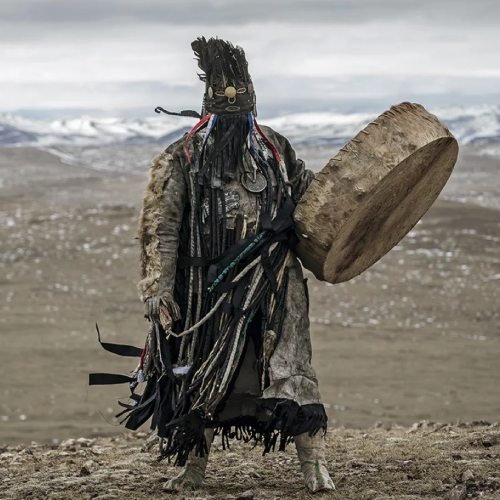
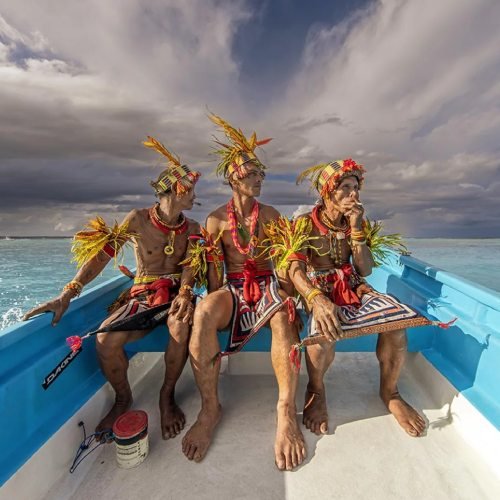
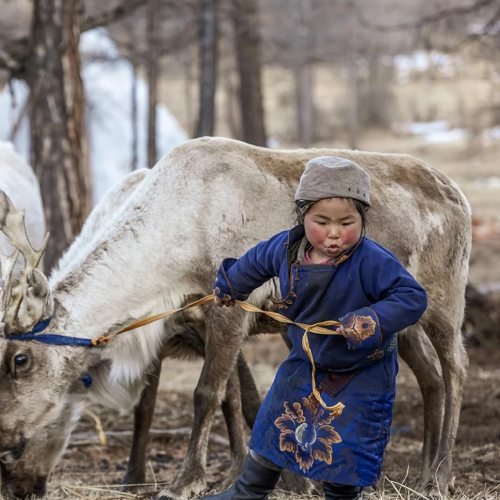
Today I'm drawn to documenting indigenous communities and disappearing traditions as a different way to explore the world. After 30 years, photography is still what gets me out there, curious, chasing the unknown.
2. Can you share the story or inspiration behind your award-winning piece? How does winning this award make you feel about your journey in photography?
Winning gold in thirteen categories is incredibly rewarding. I entered with the hope to win. But to have my work recognised among such a talented field of photographers actually means more than I thought it would.
One of the most rewarding things about this recognition is that it makes me want to see even more, to travel further, and keep pushing myself creatively. That personal sense of discovery is still driving me and hopefully my best photography is still ahead.
3. How do you decide which photo to submit for a competition?
I have to feel confident in an image before submitting it. I'm rarely going back through years of archives looking for something that might work; I'm usually choosing from photographs I've made within six months to a year while the experience and images are still fresh with me.
With the level of work being entered in competitions like the European Photography Awards, I'm very selective; I'm looking for something beyond the technical side, whether it's a particular moment, a story, or simply a feeling that stays with me. If the image doesn't excite me, I can't expect it to excite a jury.
4. What first made you pick up a camera?
It was a six-month solo backpacking trip through Asia in the mid 90s. I didn't own a camera and had very little money; my girlfriend at the time, who is now my wife, loaned me a small point-and-shoot camera. I left with just eight rolls of film for the entire six months, so every frame mattered.
When I returned and people saw the photographs, the response surprised me. That trip started a career I never could have imagined at the time, and I've been chasing photographs ever since.
5. What’s your favorite type of photography, and why do you love it?
I'm drawn to images that are difficult to make, places that are hard to reach, conditions that are unpredictable, and moments you have to work for. For many years, that meant climbing around the world.
Over time, it evolved into scuba diving wrecks, chasing storms, hunting in remote mountains, etc. I really love the entire process: the anticipation, the uncertainty, and the effort it takes to put yourself in the right place at the right moment.
6. What’s your go-to camera setup, and why does it work best for your projects? What’s your favorite feature?
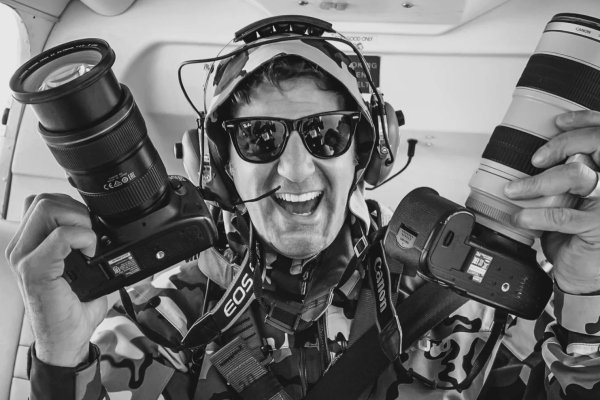
My camera setup changes depending on the project, but I still shoot with a Canon 5Ds and 5D Mark IV. The 5Ds gives me incredibly detailed large files and at this point I haven't felt the need to move to mirrorless. The cameras I have still allow me to make the images I want to make. If I'm travelling light or carrying a pack for multiple days in the mountains, my go-to lenses are the 70-200mm f/2.8 and the 11-24mm f/4.
Between those two lenses, I can tell a story in completely different ways. The 70-200mm allows me to step back, observe, and make intimate portraits or capture moments without intruding, while the 11-24mm does the exact opposite; it forces me to get physically close.
My favourite feature of any camera or lens is the versatility. I know my equipment well after years of working with it, and that allows me to stop thinking about the gear and concentrate on the subject and composition.
7. If someone looked at your work, what’s the one thing you’d want them to feel?
I want my work to create a sense of awe. To make someone stop and look twice.
8. What was the most challenging part of capturing your winning shot?
The greatest challenge is creating something authentic. You can travel halfway around the world, endure difficult conditions and finally find yourself face to face with the people you came to photograph, but the moment a camera appears, everything changes. People become aware of the lens; they stand differently; they pose.
My challenge is to get past that moment and build a connection so they forget about the camera; that's when the photograph I'm looking for happens.
9. Is there a specific place or subject that inspires you the most?
I don't think there's one place or subject that defines my inspiration. I've photographed across many countries, and what draws me in has constantly evolved over the years. Inspiration for me has never been about returning to what I already know; it's more about the next adventure, the next person I meet, the next story I want to capture. In a lot of ways, my greatest inspiration is about the photograph I haven't taken yet.
10. Who or what has been your biggest influence in photography?
My influences have changed over the years. I love looking at great photography, and seeing an extraordinary image will always inspire me. But if I had to pick my biggest influence, it would be my imagination. I'm constantly imagining photographs before they exist, thinking about where I could go, who I could meet. Other photographers inspire for sure, but ultimately it's my own curiosity and imagination that keep pushing me somewhere new.
11. What message would you share to inspire photographers to participate in photography awards, and what advice would you give to help them excel in the competition?
Participating in photography competitions is a great way to judge your work against other photographers while being inspired at the same time. You need to be your own worst critic; you need to be ruthless in deciding which images to enter because the competition is so good.
12. What’s one piece of advice for someone just starting in photography?
Have fun with it and pick up a proper camera instead of always relying on your phone. Make mistakes; if photography genuinely excites you, it's worth taking the time to really learn the craft.
13. What role do editing and post-processing play in your creative workflow?
I learned photography by shooting film, where every frame mattered and those disciplines have stayed with me. I don't believe in shooting hundreds or thousands of frames and hoping one works. I try to capture the image the way I want it in camera. In post, I do as little as possible, and I actually only really know the basics.
14. How do you see technology, like AI, influencing the future of photography and your own approach?
AI is obviously going to have a significant impact on photography; it's difficult now to distinguish what's real from what's manipulated.
Personally, I'm not particularly interested in AI for my own work. What excites me about photography is capturing something real and I'd like to keep it that way.
15. If you could photograph anything or anyone in the world, what would it be?
I have a lot of places, people, and ideas I'd love to capture, but I'm going to keep those ideas to myself for now. For me, a huge part of the excitement of photography is turning an idea into an image before talking and telling everyone about it. Hopefully, some of these ideas will become photographs I'm proud to share and perhaps even win future awards.