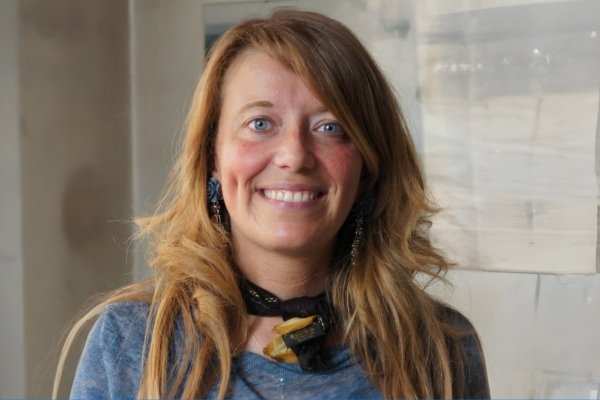
Alessia Santambrogio
1. Congratulations on winning in the European Photography Awards! Can you share a little about yourself, what inspired you to pursue photography, and how has your journey evolved since your first shot?
Thank you so much! Being recognised by the European Photography Awards is a huge honour. As a stage and performance photographer, my work has always been rooted in capturing the ephemeral beauty of live arts—dance, theatre, and movement.
I was originally drawn to photography by the desire to freeze moments that are, by nature, fleeting. My journey began with simply wanting to document reality, but over time, it evolved into an exploration of reality transformed.
Today, my camera isn't just a device to record what is in front of me, but a lens through which movement becomes abstraction, emotion, and visual magic.
2. Can you share the story or inspiration behind your award-winning piece? How does winning this award make you feel about your journey in photography?
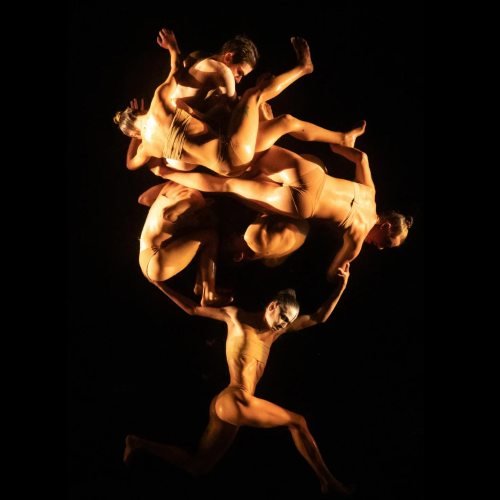
Dante's Inferno - Tableaux Vivants is an exploration of the soul’s journey through a surreal and unconventional interpretation of dance. I wanted to capture an ethereal atmosphere of floating bodies, breaking away from traditional movement stereotypes to reach a state of pure abstraction.
The goal was to take real, tangible elements—the dancers' bodies and their precise geometries—and elevate them into visionary, dreamlike tableaux that defy the laws of physics. Winning this award is a deeply validating milestone; it proves that translating the transient energy of the stage into frozen, evocative imagery resonates with a global audience.
3. How do you decide which photo to submit for a competition?
I look for images that strike a balance between technical perfection and narrative mystery. When selecting a piece, I ask myself: Does this image make the viewer stop and question what they are seeing?
For a competition like this, I chose shots from Dante’s Inferno Tableaux Vivants because it embodies both rigorous geometry and a sense of wonder. A winning entry shouldn't just be aesthetically pleasing; it needs to evoke a visceral response and tell a story beyond the frame.
4. What first made you pick up a camera?
It was a fascination with light and live emotion. I remember watching live performances and feeling frustrated that those incredible, breathtaking moments existed for only a second before dissolving into memory. Picking up a camera was my way of negotiating with time—a way to preserve the intensity of human expression and movement forever.
5. What’s your favorite type of photography, and why do you love it?
Stage and dance photography, without a doubt. Working with dancers is extraordinary because they use their bodies as instruments of pure geometry and emotion. I love the high stakes of stage photography: you don't direct the scene in real time; you have to anticipate movement, read the light, and react instantly to capture that split second where reality shifts into something ethereal and surreal.
6. What’s your go-to camera setup, and why does it work best for your projects? What’s your favorite feature?
My go-to setup is a full-frame mirrorless camera paired with a fast prime lens or a versatile 70-200mm f/2.8 for capturing dynamic stage action. Stage lighting is notoriously complex and dark, so my favourite feature is exceptional high-ISO performance combined with silent shooting. The silent shutter allows me to work seamlessly during delicate, quiet performance moments without disrupting the artists or the atmosphere.
7. If someone looked at your work, what’s the one thing you’d want them to feel?
Wonder. I want viewers to experience the childlike amazement of seeing something that defies everyday logic—to look at floating, geometric forms of bodies in space and feel, even for a second, that the laws of physics have been suspended.
8. What was the most challenging part of capturing your winning shot?
Timing and precision. In stage photography, there are no second takes. The dancers' movements in Dante's Inferno rely on absolute geometrical harmony and physical tension. Capturing the exact micro-second where the bodies align into a harmonious tableau vivant, while managing challenging theatrical light and shadow, required intense concentration and complete synchronicity with the performers.
9. Is there a specific place or subject that inspires you the most?
The human body in motion, framed by the dark, controlled space of a stage. The stage is a blank canvas where light, shadow, and human form interact. It is a controlled environment that paradoxically allows for infinite, wild, and surreal creativity.
10. Who or what has been your biggest influence in photography?
My biggest influences come from a mix of classic stage photographers, fine art painters (especially Caravaggio for his dramatic chiaroscuro lighting), and modern contemporary choreographers. I am continually inspired by art forms that treat light as a physical material and the human body as a living sculpture.
11. What message would you share to inspire photographers to participate in photography awards, and what advice would you give to help them excel in the competition?
Shoot your unique vision with absolute honesty. Participating in awards forces you to curate your work, articulate your narrative, and step out of your comfort zone. My advice for excelling is to focus on cohesion and emotion: choose work that reflects a distinct personal voice, and ensure that every element in your image—light, composition, subject—serves a specific purpose.
12. What’s one piece of advice for someone just starting in photography?
Learn to see light before you focus on gear. Technology is just a tool; understanding how light shapes form, creates emotion, and guides the viewer's eye is the true language of photography. Spend time observing how light changes scenes in real life.
13. What role do editing and post-processing play in your creative workflow?
I actually prefer to keep post-processing to an absolute minimum. As a stage photographer, my goal is to get the shot right directly in the camera. The real magic happens live, in the moment—working with the light on stage, the dancers' movements, and the exact timing of the shot.
Rather than relying on heavy digital editing, I focus all my energy on mastering composition, light, and exposure during the performance itself. For me, the power of an image lies in the authenticity of that precise, real-time capture.
14. How do you see technology, like AI, influencing the future of photography and your own approach?
AI is expanding the boundaries of visual creation, but it also highlights the irreplaceable value of real human experience and physical performance. For my work, the magic lies in the fact that these floating, surreal bodies are real dancers performing real, physically demanding feats. Technology might change how we process or present images, but the core of stage photography—the genuine connection with a live human performance—remains untouchable.
15. If you could photograph anything or anyone in the world, what would it be?
I would love to collaborate on a site-specific dance performance in an extreme natural landscape or ancient architectural ruins. Bringing the geometric precision of stage dance and tableaux vivants into a raw, majestic natural space would be an incredible continuation of this journey between reality and surrealism.