
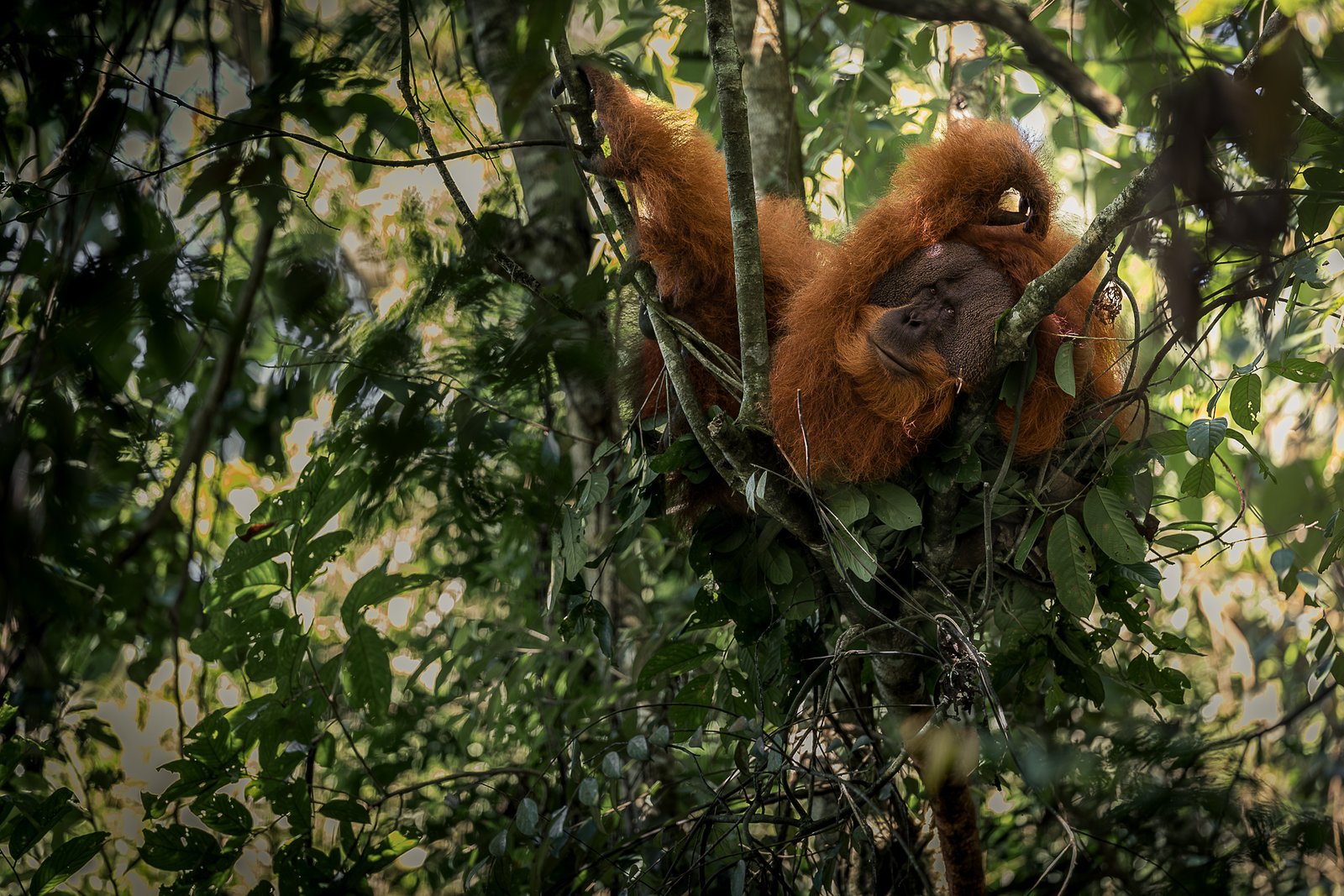
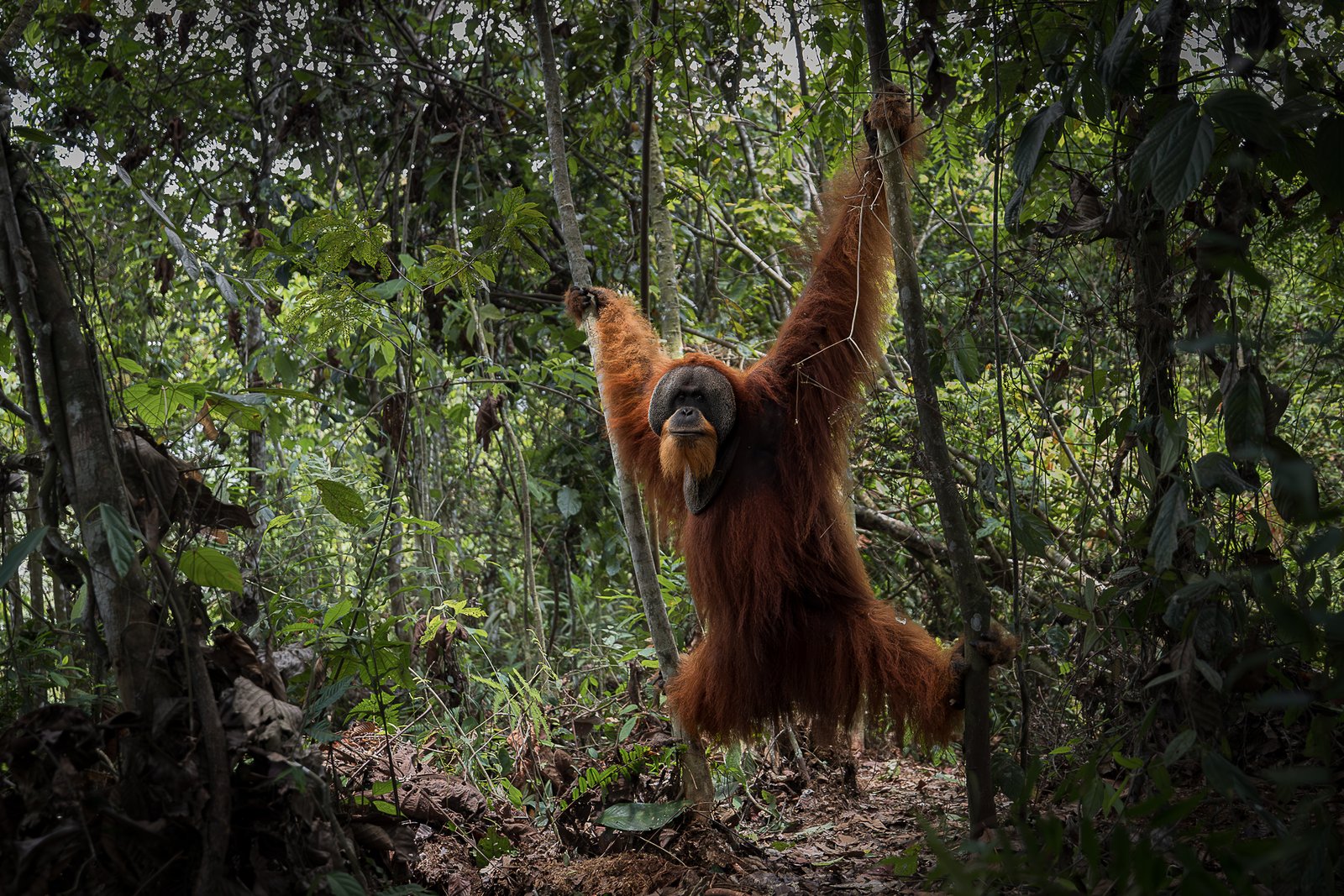
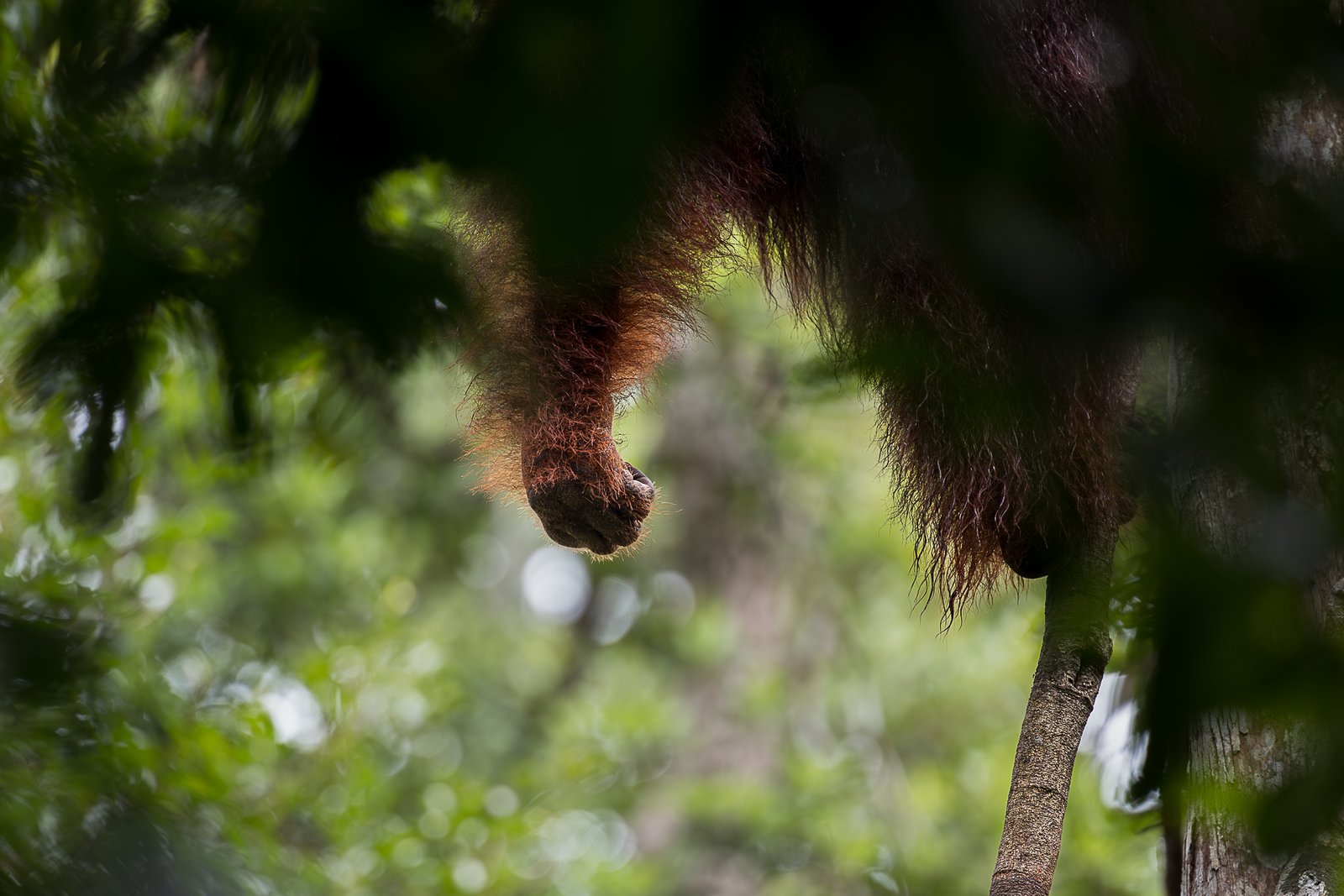
The vulnerable temple of the orange spirit
Photographer
Benoit Rondelet
Category
Nature Photography - Wildlife
Company
Benoit Rondelet
Submission Group
Amateur
Year
2026
Country / Region:
Belgium
The name orangutan comes from the Malay word orang hutan, which literally means man of the forest. This great ape makes its home in the treetops and tirelessly roams the canopy in search of fruit, leaves, and insects. Orangutans, of which there are three species, have shaggy reddish fur and grasping hands and feet. Their powerful arms are longer than their legs and can reach two meters. These mammals spend most of their time in the trees searching for food. Orangutans live in primary and secondary forests. Although they are found at over 1,500 meters above sea level, they mostly live in lowland areas and prefer river valley forests or flooded plains. In 20 years, orangutan populations have lost 80% of their range and have shrunk by half. Great apes are particularly vulnerable due to their very low reproduction rate. Weaning periods are long. Slow learning is essential for these primates, who live in unstable forest habitats and have complex social relationships and superior cognitive abilities. Orangutans reproduce at a very slow rate, which partly explains their critically endangered status: female orangutans only give birth every 6 or 7 years (approximately 4 or 5 times in a female's lifetime). Baby orangutans never leave their mothers, and vice versa. The young are nursed until they are 6 or 7 years old. They are extremely dependent on their mothers. However, young males can leave their mothers at puberty. Females, on the other hand, stay longer and thus improve their knowledge of survival skills in the wild. Orangutan conservation programs pursue numerous objectives aimed at the overall protection of hominids and their habitat. Rescue and rehabilitation: Endangered orangutans are rescued from critical situations, rehabilitated, and prepared for eventual reintroduction into the wild. Rainforest protection: The protection of remaining rainforests is a key concern to preserve the orangutans' natural habitat. Anti-poaching and wildlife trade: Active measures to combat poaching and the illegal wildlife trade protect orangutans and other endangered species. Biodiversity monitoring: Biodiversity monitoring to ensure ecosystem health. Environmental Education: Educating children and adults to raise awareness about protecting the environment and orangutans.






Photographer / Company
Gian Paolo Russo
Category
Fine Art Photography - Architecture
Country / Region
Italy

Photographer / Company
Derry Ainsworth
Category
Architecture Photography - Bridges
Country / Region
Hong Kong SAR
Photographer / Company
Marcel van Beek
Category
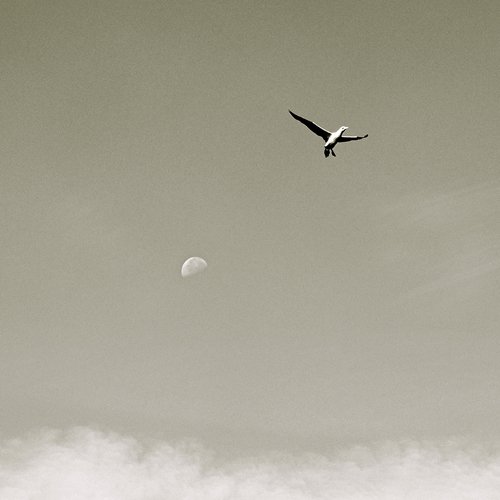
Special Category - Minimalism Photography
Country / Region
Germany

Photographer / Company
Ovi D. Pop
Category
People Photography - Nudes
Country / Region
Romania