Olga Trehub
1. Congratulations on winning in the European Photography Awards! Can you share a little about yourself, what inspired you to pursue photography, and how has your journey evolved since your first shot?
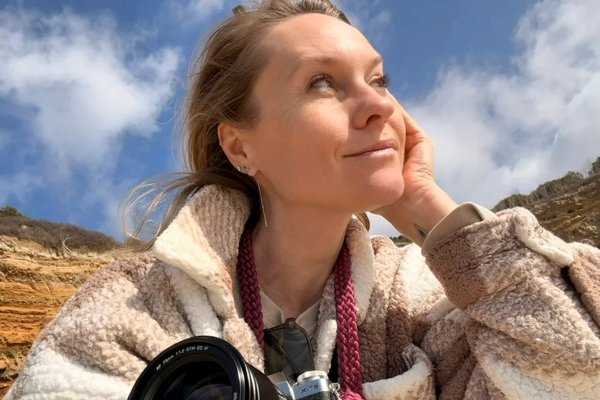
Thank you! I am a Ukrainian photographer, journalist and communications professional currently based in Palm Springs, California.
I bought my first camera when I was 18. For many years, photography was simply my passion. I was that person who always had a camera and photographed everyone — which made me either the soul of every party or the most annoying person there. Probably both.
Professionally, I built my career around words: journalism, writing and communications. Then the war in Ukraine changed my life. When I had to leave my country, suddenly words — the tool I had relied on my whole life — stopped working for me. I wrote about this a few years ago: my camera became another way to communicate when I couldn't find the words.
Photography eventually brought me back to people and, in many ways, back to myself.
Since then, my journey has taken me from photographing my family and fellow Ukrainians as refugees to editorial photography, magazine covers, exhibitions, commercial work, portraits and awards. I’ve photographed mayors and artists; my photography has appeared in Forbes, and in 2026, I presented my work at Intersect Palm Springs, an international contemporary art fair.
Sometimes I think about that 18-year-old girl with her first camera and wonder what she would think about all of this. I think she would be pretty happy.
2. Can you share the story or inspiration behind your award-winning piece? How does winning this award make you feel about your journey in photography?
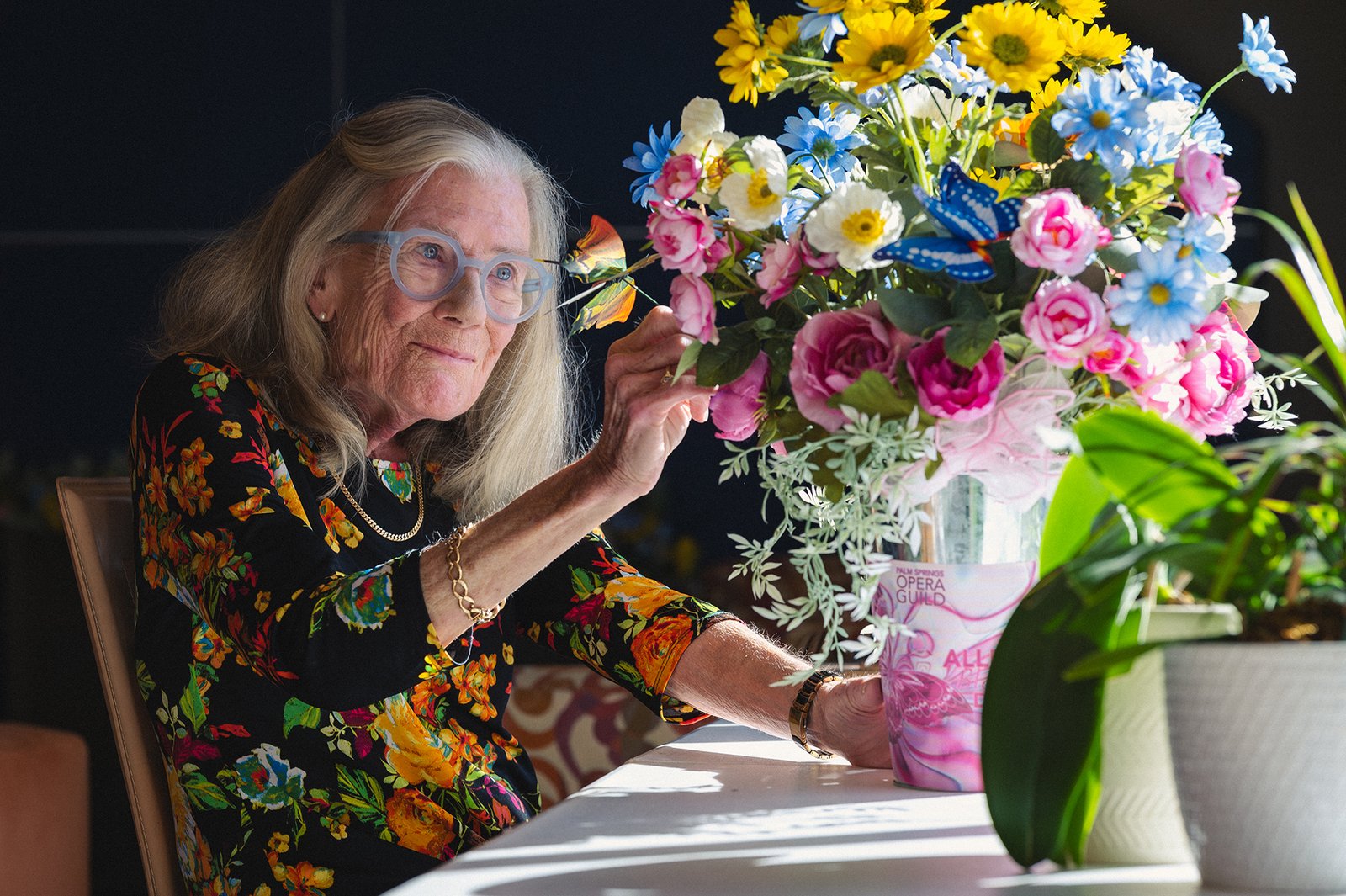
The winning portrait is of Rosie Vacano and comes from my series Portraits of Her, a project about women, their stories, strength, beauty and all the contradictions we carry. When Rosie opened the door of her Palm Springs home, I immediately understood that I had entered her world.
There were flowers everywhere. Large bouquets, small bouquets, flowers on tables, cabinets, shelves and even the floor. Her home is colourful and elegant, filled with art and meaningful little details, and outside is the garden she loves and takes enormous pride in.
And there was Rosie herself — tiny, delicate and radiant among all those flowers, wearing a floral dress and stylish glasses, with eyes as blue as the Palm Springs sky during its perfect season. But Rosie is much more than this delicate first impression. She is an old-school Palm Springs resident, a philanthropist, and a longtime supporter of music, the arts, and her community.
She has this wonderful combination of kindness, intelligence, elegance and quiet strength. She literally gives people flowers — she helps decorate events, and at one point she opened a closet and showed me bouquets already prepared for upcoming celebrations.
This is what I love about portrait photography. You arrive to photograph a face, but if you're lucky, you leave having photographed a little piece of someone's world.
Winning Silver for Rosie's portrait feels very personal to me. Portraits of Her is not commercial work or an assignment someone gave me. I created it because I wanted to photograph women whose personalities and stories fascinated me.
So having one of these portraits recognised internationally feels like someone looked at something that was deeply personal to me and said, Yes. We see it too. Awards are wonderful — and I am definitely not going to pretend I don't enjoy winning one — but this one means more because it recognises the kind of photography I love most. People. Their stories. And that tiny fraction of a second when they let me really see them.
3. How do you decide which photo to submit for a competition?
Oh, badly.
I can select photographs for a client very quickly. Selecting one of my own photographs for a competition suddenly becomes a major philosophical crisis. I try to stop asking which photograph is the prettiest or most technically perfect and ask which one makes me stop.
A strong photograph should be able to live without a long explanation attached to it. Of course, the story adds another layer, but the image has to speak first. And then eventually I stop overthinking, press Submit and immediately begin questioning my decision again.
Apparently this strategy works sometimes.
4. What first made you pick up a camera?
People.
I have always been fascinated by people — their faces, emotions, relationships and little moments that disappear immediately after they happen. With my first camera in hand, I started photographing everyone around me. I wasn't thinking about becoming a professional photographer. I simply loved preserving moments.
Years later, I understand that this was another form of what I had always been doing as a writer: observing people and telling their stories. I just changed the language.
5. What’s your favorite type of photography, and why do you love it?
Portrait photography. Absolutely.
I love photographing many things. I have photographed cars that cost more than houses, California landscapes that don't look real, events, architecture, fashion — and I genuinely enjoy all of it. But put a human being in front of my camera and everything becomes more interesting.
For me, a good portrait is not only about how someone looks. It is about what happens between us during those 15 minutes, 30 minutes or two hours. I talk a lot. We laugh a lot.
Sometimes we talk about very personal things. Sometimes we're ridiculous. I've always believed that a photoshoot can be a little bit of therapy. People often leave feeling beautiful before they have even received a single edited photograph. That is one of my favourite parts of the job.
6. What’s your go-to camera setup, and why does it work best for your projects? What’s your favorite feature?
My Fujifilm X-T3 has been my workhorse for years, and for portraits I love my Viltrox 75mm f/1.2. I like equipment that lets me stop thinking about equipment. The 75mm gives me the intimacy and separation I love in portraits, and the wide aperture gives me room to work beautifully with available light.
But I am definitely not the photographer who believes a more expensive camera automatically makes a better photographer. The most useful feature is still knowing when to press the button. Unfortunately, nobody sells an upgrade for that.
7. If someone looked at your work, what’s the one thing you’d want them to feel?
I want them to feel something.
It doesn't necessarily have to be what I felt. Maybe they see strength where I saw vulnerability. Maybe they see sadness where I saw peace. That's okay.
Once a photograph leaves me, it starts having its own relationships with people. What I don't want is indifference. If someone stops scrolling for five seconds, looks into the person's eyes and wonders who they are — I have already done something.
8. What was the most challenging part of capturing your winning shot?
The same challenge I have with every portrait: getting past the awareness of being photographed.
Almost everyone changes when a camera appears. Suddenly we remember our hands. We remember our chin. We remember every insecurity we have ever had since approximately seventh grade.
My job is to get us past that point. With Rosie, I wanted strength without stiffness and beauty without making the portrait feel manufactured. So the challenge wasn't technical. It was finding that moment when the pose stopped feeling like a pose. That moment is usually very short. Luckily, cameras are fast.
9. Is there a specific place or subject that inspires you the most?
People are my endless subject, but California — and especially the desert — has become a huge visual inspiration for me.
Palm Springs is slightly absurd in the best possible way. The light is dramatic. The mountains are right there. The palms are perfect. The architecture has personality. Even the cactuses look like they have complicated dating histories.
I came here from Ukraine, so this landscape still feels exotic to me. I think being an immigrant gives you an interesting advantage as a photographer: you notice things other people have stopped noticing. I hope I never become completely used to California.
10. Who or what has been your biggest influence in photography?
My dad.
Some of my earliest memories of photography are connected to him. I remember being little and going through his black-and-white photographs of us — his children, our family, our life.
I remember how seriously he would study the shots and choose the best one, and how mysterious it felt when he went into the darkroom to take the film out of his camera. I didn't know then that photography would become such an important part of my own life. I was simply watching my dad preserve ours.
But his influence goes much deeper than photography. He is my best example of what a human being and a man can be. He taught me to appreciate life — not someday, not when everything is perfect, but here, right now, in this particular moment.
Maybe that's part of why photography feels so natural to me. That's exactly what a photograph does: it says, This happened. This person was here. This moment mattered.
Later, journalism taught me to observe and ask questions. Writing taught me to look for details. Immigration taught me to notice belonging and displacement.
Starting over taught me that people often carry much more than you can see. And the people I photograph constantly teach me something too. I don't want to photograph only faces. I want to understand, even for a moment, who is behind them. Maybe I learned that from my dad before I even knew I was learning it.
11. What message would you share to inspire photographers to participate in photography awards, and what advice would you give to help them excel in the competition?
Submit your work. Please don't reject yourself on behalf of the jury. They are perfectly capable of doing that without your assistance. I know how easy it is to think, “There are better photographers,” “This isn't strong enough,” or “I'll do it next year.”
Of course there are better photographers. There always will be. That's irrelevant. Choose the photograph you believe in. Follow the requirements. Be thoughtful about the category. Don't submit something simply because it received the most likes on Instagram. And then let it go.
Sometimes you lose. Sometimes you win. Sometimes you spend three days questioning your submission and then it wins Silver.
12. What’s one piece of advice for someone just starting in photography?
Photograph.
It sounds embarrassingly obvious, but photograph a lot. Don't spend your first year worrying about developing your “signature style.” Your style will find you while you're busy looking at the world. Learn light.
Learn your camera. Look at great photography. Make terrible photographs. Make thousands of them. Figure out why they're terrible. And most importantly, learn to see people. Technical skills can be taught. Curiosity is harder.
13. What role do editing and post-processing play in your creative workflow?
Editing is important, but I don't want editing to become the main character. I want the photograph to exist when I press the shutter. Post-processing helps me bring the image closer to what I felt in that moment — light, tone, contrast, colour, atmosphere.
With portraits, I am especially careful not to erase the human being while trying to “perfect” her. Skin has texture. Faces have lines. People have history. I want someone to look like the best version of themselves, not like their distant AI-generated cousin.
14. How do you see technology, like AI, influencing the future of photography and your own approach?
AI is fascinating. And useful. And a little scary. Usually all at the same time. I don't think photographers can ignore it. It is already changing how images are created, edited and consumed, and the technology will only become more convincing. But strangely, AI makes me value photography even more. An AI can create a beautiful woman who never existed, put her in perfect light that never happened, in a location she never visited.
I can photograph Rosie.
There was a real woman in front of me. There was a conversation. There was trust. There was a particular day and a particular fraction of a second that actually existed. That matters to me.
I'm happy to use new technology when it helps me work better. But I don't want technology to replace the reason I picked up the camera in the first place: human connection. In a world where we may soon question whether everything we see actually happened, perhaps a photographer's role as a witness will become important again.
15. If you could photograph anything or anyone in the world, what would it be?
This is where I am supposed to say Brad Pitt, right? Or Johnny Depp!
There are definitely famous people I would love to photograph. But fame isn't really the thing that makes me curious about someone. Give me a face with a story.
I would love to continue photographing extraordinary women, immigrants, artists, people rebuilding their lives, and people whose stories might otherwise disappear. I know what it feels like to leave one life behind and build another one. Maybe that's why I'm drawn to people who contain several lives inside them.
But Johnny, if you're reading this — I'm in Palm Springs, the light is beautiful, and I can make room in my schedule. Brad Pitt, you're still welcome too.