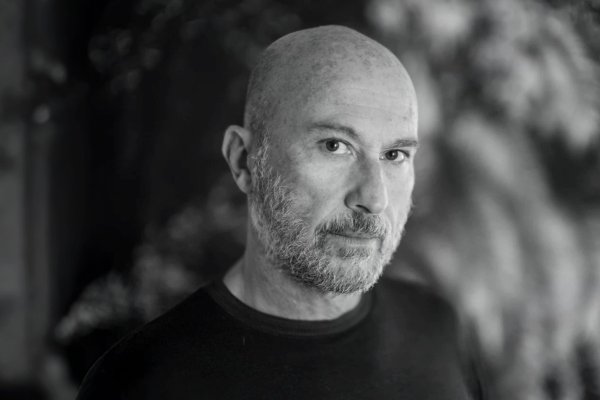
Stefano Paradiso
1. Congratulations on winning in the European Photography Awards! Can you share a little about yourself, what inspired you to pursue photography, and how has your journey evolved since your first shot?
Thank you. It is a true honour for me and a great joy.
It could be a long story, but I’ll try to keep it short. I started very young, when I was around twelve. My father had a completely different profession, but he loved Super 8 and owned a few very simple cameras that he mostly used to photograph our family. I was always following him, fascinated by the possibility of looking through that little magical opening — the viewfinder.
By the time I was in middle school, I already had an old Olympus 35mm camera and was taking photographs constantly. From there, my path led almost naturally to the Roberto Rossellini School of Photography and Cinema in Rome. Those were five intense years of study, during which I literally fell in love with cinema.
That was the beginning of a long career behind the camera, which eventually led me to become a cinematographer and to live in France for many years, working across film, television, and documentaries.
In 2018, I returned to Italy and reopened my darkroom. It marked the beginning of a new phase and of a more personal and experimental photographic research.
2. Can you share the story or inspiration behind your award-winning piece? How does winning this award make you feel about your journey in photography?
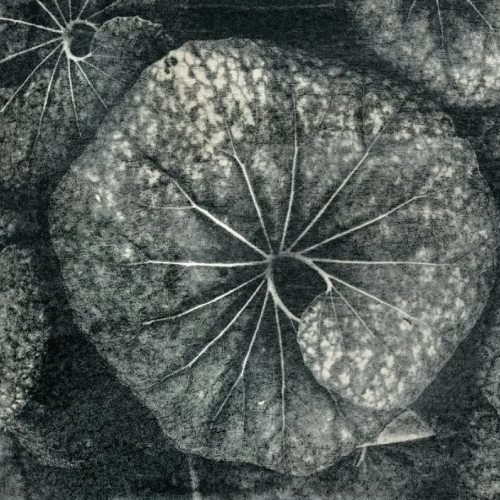
I started Imago Plantae about three years ago. At first, it was a very instinctive journey, until, through a few specific images, I began to recognise the direction I had been searching for.
I wanted to find a visual language that did not simply describe botany, but used its forms and signs as a concise language, almost like a haiku. I wanted nature to be able to speak and express something that I had first felt myself.
The technique I developed later allowed me to give this intuition an increasingly precise form. But at its core, the process remains deeply instinctive, and I always try to leave room for the unconscious.
For this reason, receiving Gold at the European Photography Awards makes me particularly happy. It is an important recognition for a very personal project that is still open and continuously evolving.
3. How do you decide which photo to submit for a competition?
I don’t have a precise rule. I work on several projects, and I almost never consider them truly finished. I like to leave room for them to evolve. Imago Plantae is a project I feel particularly close to, and I have decided to give it as much visibility as possible.
4. What first made you pick up a camera?
I don’t really know. It was an almost magical attraction, difficult to explain.
I was fascinated by the possibility of looking through a viewfinder and deciding which parts of the outside world would be visible and which would remain outside the frame. Only much later did I understand that this simple choice could become a way of telling a story and, above all, of creating emotion.
For me, this is something both cinema and photography must be able to do masterfully.
5. What’s your favorite type of photography, and why do you love it?
I don’t have one particular favorite type of photography. I love images that speak to me, that stimulate me, that make me dream, or even make me angry.
6. What’s your go-to camera setup, and why does it work best for your projects? What’s your favorite feature?
I mainly work with Leica cameras, both digital — monochrome and colour — and 35mm film. I also use Polaroid cameras, a Mamiya RZ67, and I still keep my Nikon F3 with me, which has been part of my life for more than thirty years.
For some projects, I particularly appreciate the files produced by the Leica Monochrom because they offer great versatility and allow me to create a bridge between digital and analogue. The digital file becomes the starting point for a negative that I produce later, before moving on to analogue printing in the darkroom.
7. If someone looked at your work, what’s the one thing you’d want them to feel?
My desire is to evoke curiosity and, above all, emotion.
I like to think that someone looking at one of my photographs might imagine something that I myself did not see. Once the image has been made, it no longer belongs only to my own gaze: it can open up a different space in the viewer’s imagination.
8. What was the most challenging part of capturing your winning shot?
Taking the photograph itself was actually very simple. I was looking for a plant in shadow and found a very large one that immediately attracted me.
The more delicate part came afterwards. Once I had created the digital negative, I moved on to analogue printing in the darkroom, carefully preparing the Washi paper. The first attempt was not perfect, and because I work with an old contact-printing enlarger, I have to manage contrast, exposure times, and temperatures very precisely.
It is a process in which technique and unpredictability coexist, and this is one of the things I love most about working in the darkroom. I like allowing myself to be carried by this unpredictability: sometimes it produces mistakes or unexpected results that become part of the image. When I feel that they contain something interesting, I try to understand them, use them, and even repeat them intentionally.
In this sense, the darkroom becomes the final creative stage in the construction of the image.
9. Is there a specific place or subject that inspires you the most?
After spending many years filming actors and scenes filled with human presence, in photography, I find myself naturally drawn to nature in photography.
But for me, everything remains connected to human beings, even when no person is visible in the image. I am also interested in the traces of their absence.
10. Who or what has been your biggest influence in photography?
The list could be endless. Japanese and Chinese painting have certainly had a strong influence on me, as have photographers such as Luigi Ghirri and Josef Koudelka, a great deal of literature, and, inevitably, auteur cinema.
They are very different languages, but I believe they have all contributed, in different ways, to shaping my way of seeing.
11. What message would you share to inspire photographers to participate in photography awards, and what advice would you give to help them excel in the competition?
It is a difficult question. The first piece of advice I would give is to persist, even by submitting the same projects more than once. The fact that a body of work is not recognised in one context does not mean that it cannot be recognised in another.
But I believe the most important thing is to search for your own visual language, especially today, when we are constantly surrounded by images of every kind.
It is a long journey, and mistakes are a fundamental part of growth.
12. What’s one piece of advice for someone just starting in photography?
I would say: read a lot, study the work of great photographers, look at art and cinema, and explore everything that can nourish your imagination.
But above all, allow yourself to let go. At some point, you have to stop looking for all the answers outside yourself and learn to listen more closely to your own instinct, to your gut feeling.
13. What role do editing and post-processing play in your creative workflow?
But above all, allow yourself to let go. At some point, you have to stop looking for all the answers outside yourself and learn to listen more closely to your own instinct, to your gut feeling.
For my black-and-white work, I personally carry out the entire analogue process in the darkroom. When I need to finalise files for larger-format prints, I work with Paolo Lecca, a colourist I have collaborated with for many years.
Editing, in the sense of selecting images, is perhaps one of the most delicate stages. I often discuss the selection with my partner, the writer Marta Pasqualini, and at other times with friends and people whose opinions I trust. I listen carefully, but in the end the final choice remains mine.
14. How do you see technology, like AI, influencing the future of photography and your own approach?
Artificial intelligence is already having a profound influence on the world of photography. As a professional, I follow this evolution with great interest. It is a technology that is already part of our present, and I believe it is important to understand it.
Personally, I consider AI-generated imagery a new visual language, one that should be respected and recognised within its own context. At the same time, I believe it is important to distinguish it from photography itself.
Perhaps this is also why, in my personal research, I continue to feel a strong need for the analog world, for physical materials, and for the tangible process of making an image.
In cinema, however, I see many possibilities: from visual effects to the simulation and previsualization of scenes that will later be physically filmed. I also find AI very useful as a research tool and in the development and preparation of new projects.
15. If you could photograph anything or anyone in the world, what would it be?
I would like to photograph the underground world, especially that of trees.