Henrik Moller
1. Congratulations on winning in the European Photography Awards! Can you share a little about yourself, what inspired you to pursue photography, and how has your journey evolved since your first shot?
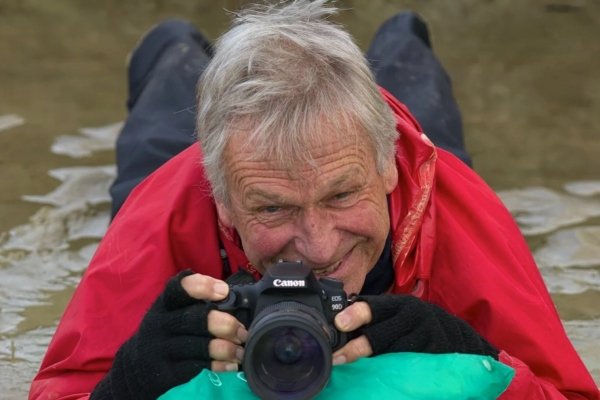
I’m an ecologist who spent about 50 years trying to understand the world through science, numbers, evidence and rather a lot of words. Photography arrived after retirement as a kind of detox.
I realised I was tired of trying to persuade people to live more sustainably by giving them better arguments. Photography offered another route — getting out of my head and into my heart. I’m increasingly interested in identity, our relationship with place, and how people find their own place in the world. My hope is that if we feel more connected, caring for the world might follow naturally.
So I’ve gone from trying to explain things to trying to make people wonder.
2. Can you share the story or inspiration behind your award-winning piece? How does winning this award make you feel about your journey in photography?
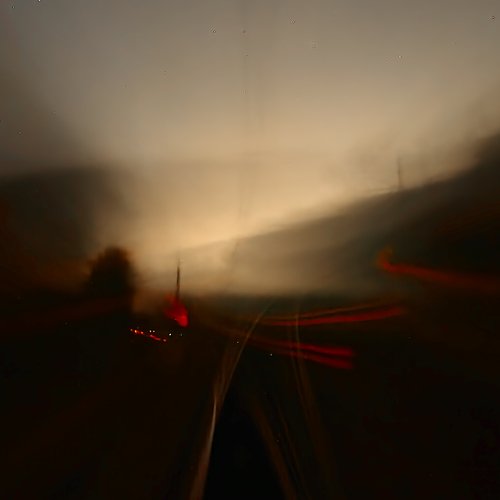
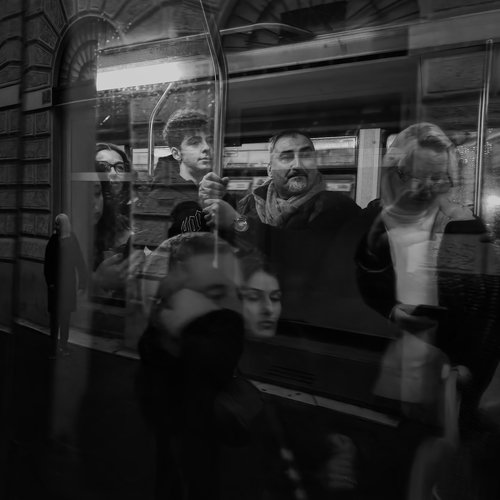
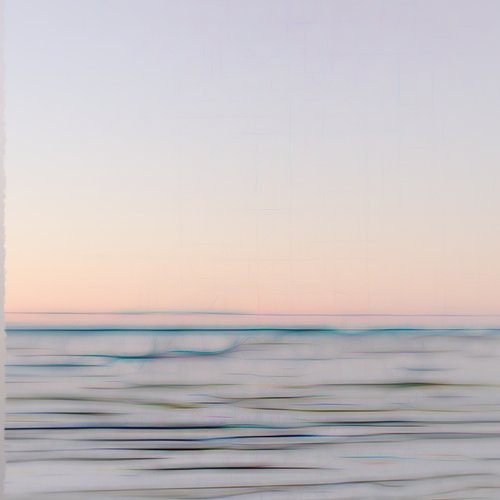
The Platinum Award was for Passages, a series originally called InterCity 63 from Copenhagen. It grew out of a train journey across Denmark while I was travelling to see my brother, who had recently been paralysed by a severe stroke.
I was also feeling caught between two countries — Denmark, where I was born, and New Zealand, where I have lived almost all my life. The blurred landscapes became a rather good metaphor for all that uncertainty: movement, memory, identity and a mind travelling in several directions at once.
I’m delighted, honoured — and frankly rather surprised. The series had previously been rejected by FIAP as technically poor and lacking a story. So the Platinum Award from EPA felt like a particularly satisfying vote for trusting the feeling of an image, even when it doesn’t tick all the conventional technical boxes.
3. How do you decide which photo to submit for a competition?
I particularly like competitions that allow series rather than forcing every photograph to stand alone. A group of connected images gives you room to tell a bigger, messier story.
That’s one reason I was attracted to EPA. It embraces a much wider range of genres, including experimental work, and I really value the geographic category too. My own photography is increasingly about connections to place.
I also wanted to see whether EPA really meant it about welcoming experimentation. Photography is drowning in images — technically immaculate, instantly recognisable images are everywhere. So I rather deliberately submitted some risky, technically marginal work. The interesting question for me was: will the story and feeling matter more than photographic perfection?
EPA answered that with a pretty resounding “yes”. I’m grateful for that.
4. What first made you pick up a camera?
Retirement — and probably burnout!
After decades of scientific research and formal scientific storytelling, I needed to get out of my head. I wanted to explore environmental care, people and place without always having to build an argument around them.
Photography gave me permission to stop explaining things for a while.
5. What’s your favorite type of photography, and why do you love it?
I started with fairly straightforward representational photography because I wanted the picture to tell the story clearly.
Now I’m much more attracted to minimalism, abstraction and what I think of as a kind of nature expressionism.
These days I’m less interested in telling people what a photograph means. I’d rather give them a little mystery and let them bring their own memories, experiences and imagination to it.
6. What’s your go-to camera setup, and why does it work best for your projects? What’s your favorite feature?
The camera comes second. It depends entirely on the story I’m trying to tell.
I do take a lot of photographs around dawn and dusk, though. As an ecologist, I find those transitions irresistible — the changing light, the rhythms of life, the sounds and smells, and that moment when the whole ecological energy of a place seems to shift. In low-light conditions, I like to use a camera and very long exposures.
So perhaps my favourite “feature” is actually life and land between night and day.
7. If someone looked at your work, what’s the one thing you’d want them to feel?
Emotion. Let the memory, experience or imagination arrive first. Analysis can catch the next train.
8. What was the most challenging part of capturing your winning shot?
Pretty much everything was moving — the train, the light, my thoughts.
The train was speeding in and out of towns, past signals and lights, while changing speed constantly. I wanted enough movement to create the feeling of travelling, but enough form for the images not simply to dissolve.
And I was shooting through the thick rear window of the train, with reflections from the controls inside the compartment. It was technically awkward. Which, as it turned out, was probably rather helpful.
9. Is there a specific place or subject that inspires you the most?
I’ve been extraordinarily lucky as an ecologist to spend time in mountains, forests, Antarctica, coastlines and offshore islands, and close to all sorts of creatures — from wētā and wasps to birds, snails, rats and squirrels.
So my love of nature is where my photography usually starts. But I’ve become increasingly sceptical about the conventions of “natural history” photography.
Why isolate an animal from its habitat? Why pretend humans aren’t part of nature? And why insist that a photograph must preserve a particular version of reality when digital tools allow us to explore much richer stories?
For me, the connections are the interesting bit. A plant or animal is never really just a plant or animal. It belongs somewhere. So do we. We belong in nature and must never forget that.
10. Who or what has been your biggest influence in photography?
My local camera club taught me the basics. I’m grateful for that — but eventually its rules about what constituted a “good” photograph became more of a handicap than a help.
I spent two years learning the rules and the next three trying to forget them!
The biggest influence since then has actually been finding my tribe. Noelle Bennett and Gary McClintock are two wonderfully inventive photographers with whom I formed the Bricolage Collective (www.bricolage.org.nz). We share ideas, experiment, and give each other honest feedback. That has since grown into a wider Bricolage Community of like-minded tinkerers.
Finding people who encourage you to play rather than conform is enormously liberating.
11. What message would you share to inspire photographers to participate in photography awards, and what advice would you give to help them excel in the competition?
Enter — but don’t try to game the competition.
There are plenty of good guides to the mechanics of entering. The harder bit is staying true to yourself when judges don’t necessarily understand what you’re trying to do.
If your work is unusual, rejection is quite likely. It can make you defensive, or worse, make you start producing photographs you think judges will like rather than photographs you actually believe in.
I find competitions most useful as a benchmark. Look carefully at what succeeds and what doesn’t, learn what you can, absorb the knocks — and then carry on.
Resilience, curiosity and a thickish skin help. Don’t let the Impostor Syndrome monster in.
12. What’s one piece of advice for someone just starting in photography?
Play. Try everything for a while — different genres, techniques, subjects and ways of processing images. Then gradually stop worrying about what photography is supposed to look like and start finding out what your photography looks like.
13. What role do editing and post-processing play in your creative workflow?
An increasingly huge one.
Traditional photography is rather “front-loaded”: learn to previsualise the photograph, raise the camera only when you know what you want, press the button — job done.
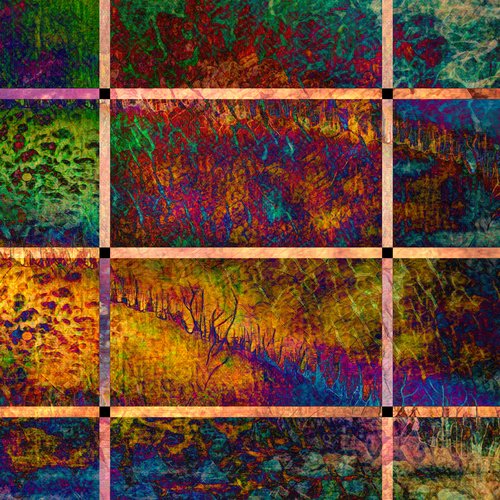
Digital photography lets me turn that upside down. I might take thousands of photographs of the same place in changing light and then start playing with layers, overlays, colours and other transformations.
It isn’t random. It’s more like following an intuitive trail of possibilities. It’s a “back-loaded” creative process
Paul Klee, the celebrated Swiss artist, began his paintings with the simplest of marks and built from there. His idea of “an active line on a walk” emphasises spontaneity, movement, and exploration in a creative process with little previsualised outcome. I like that idea. Start somewhere, make a move, see what happens, then make another. The final image is discovered when it reveals itself.
And yes, you still need a decent starting photograph. You can’t polish a turd!
14. How do you see technology, like AI, influencing the future of photography and your own approach?
AI is going to change photography enormously. I’m just not very interested in letting it make my photographs for me.
Part of what I enjoy is the uncertainty of not knowing where my own decisions will lead. If I hand that process over to a machine, I worry I’ll lose some of the creative struggle — and the discoveries that come with it.
Others will use AI brilliantly, and I’m interested to see what happens. But for now, I rather like making my own mess.
15. If you could photograph anything or anyone in the world, what would it be?
I honestly don’t know. And that’s what’s exciting.
I don’t really know where this photographic journey is taking me, other than towards a better understanding of myself, my place and my community.
If along the way my photographs help someone else discover something about themselves, their place or their direction in life, I’ll be pretty happy. That would be enough.